Menopause body odour: why it changes and what helps
· 4 min read
Somewhere in your 40s or 50s, you notice a smell you don't recognise. It's stronger than before, it turns up at odd moments, and the deodorant you've used for years no longer touches it. Many women describe exactly this in perimenopause. It's common, it's rarely talked about, and it isn't a sign that you're doing anything wrong.
Why your smell can change in perimenopause
The NHS lists hormonal changes as one of the common causes of body odour (NHS: body odour). Perimenopause brings several changes that can all add to it:
- Hot flushes and night sweats. Both are among the most common menopause symptoms the NHS describes (NHS: menopause symptoms). More sweat, and more warmth, means more for skin bacteria to work on.
- Anxiety and stress. The NHS also lists anxiety and mood changes. Stress sweat comes from the underarm glands that make the thicker sweat, which is the kind that smells.
- Poor sleep. Waking up hot and damp in the night leaves sweat sitting on skin and in bedding for hours.
Sweat itself has almost no smell. The smell appears when a small number of skin bacteria break down the thicker underarm sweat into strong-smelling compounds. When there's more of that sweat, more often, the smell gets stronger and comes back faster. If you want the full picture, we explain it in why your armpits still smell after a shower.
How women describe it
The words are often specific: stronger, sharper, "meatier" than ordinary sweat. It shows up at night and in bed, or straight after a shower once you warm up. Clothes that used to wash clean start to hold on to it. Some women say it smells like onions, which has a real chemical explanation (why armpits can smell like onions).
It can also be quietly upsetting. If that's where you are, you're far from alone.
What helps day to day
- Dress in layers. Being able to take a layer off when a flush starts means less sweat and less warmth.
- Choose natural fabrics, in the day and at night. The NHS suggests cotton, wool or silk over synthetics. Cotton nightwear and bedding help with night sweats too.
- Wash and dry your underarms properly. Morning and evening if night sweats are frequent, and always dry completely before you apply anything.
- Keep a spare top at work or in your bag. A change after a flush resets the clock.
- Wash tops inside out. Retire the ones that still smell when they come out of the wash.
- Use a deodorant made for strong odour. One that works on the smell, rather than one that mostly adds fragrance.
Talk to your GP
Hot flushes, night sweats and anxiety are all things a GP can help with, including treatment options such as HRT. The NHS suggests seeing a GP if you think you have menopause symptoms and want to talk about your options (NHS: menopause symptoms). It also suggests seeing one if your body odour smells different from how it usually does and hasn't improved with self-care.
A deodorant can help with the smell. It doesn't treat menopause symptoms, and MARL doesn't claim to.
Choosing a deodorant
A deodorant works on smell; an antiperspirant reduces sweat. If smell is what bothers you, look for a deodorant made for strong odour, and check the ingredients if baking soda has never agreed with you.
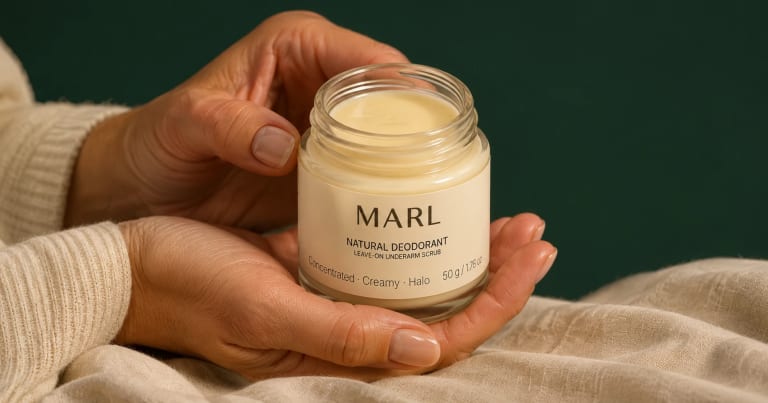
That's what MARL is: our mum made it for our sister's strong, stubborn sweat smell. A balm with only seven ingredients and no baking soda. Alum stone and Nigella do the odour work, from the first morning, with no detox period.